EN

Why Brass Jewelry Turns Skin Green - and How We Prevent It
2026/09/23
Discover why brass jewelry can cause green marks on skin and how AURAE prevents this issue effectively.
Choosing a gemstone is the single decision that shapes everything else in a bespoke commission. It decides how the finished piece photographs, how it wears after ten years, and how the budget is distributed between the stone and the metalwork. At AURAE, we build each piece around three questions from our Bespoke Gemstone Selection Guide: how hard is the stone, what colour story does the client want, and how will it be set? This article walks through the same sequence our design team uses before a single line of CAD is drawn.
Hardness is the least glamorous and most practical filter. On the Mohs scale, a lab-grown diamond sits at 10 and remains the most durable option for a piece worn every day, offering the same physical and chemical properties as a mined diamond. Moissanite follows at 9.25 with exceptional fire and rainbow brilliance, which is why it photographs so well in campaign imagery. Zircon is a natural gemstone with high dispersion and a hardness of 8.0-8.5; it delivers real sparkle at an accessible price, and it is a sensible choice for statement pieces or fashion collections that rotate seasonally.
For coloured stones, ruby and sapphire both reach 9, which makes them genuinely daily-wearable. Emerald sits at 7.5-8: rich, iconic, and beautiful, but it requires gentle care and a protective setting. Our light luxury palette, from London Blue topaz to amethyst, citrine, peridot, garnet and tourmaline, spans 6.5-8 on the same scale, described in our guide as durable elegance rather than indestructible glamour.
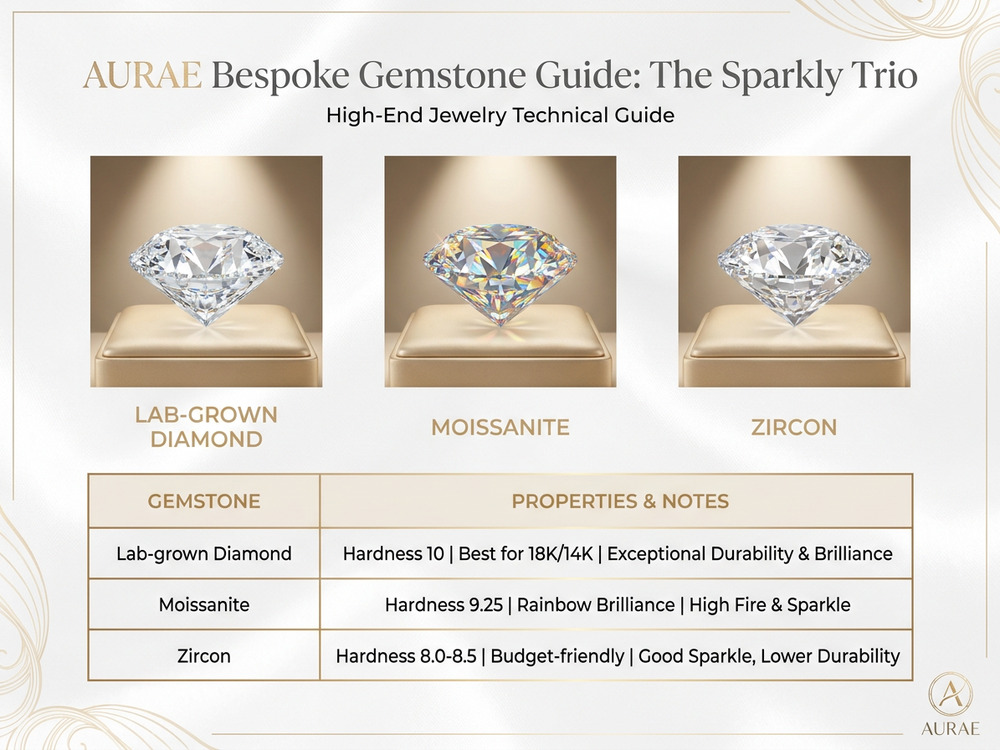
Colour is where a commission becomes personal. Our guide groups stones into three families so that clients can decide the mood first and the specifics second. The Sparkly Trio covers lab diamond, moissanite and zircon: colourless, brilliant, and easy to pair with 18K or 14K gold in any tone. Classic & Vivid covers Deep Pigeon Blood ruby, Royal Blue sapphire and Vivid Green emerald, each available as earth-mined rarity or as a lab-grown option with identical optical character. The Light Luxury palette then opens up a much wider colour field - topaz, amethyst, citrine, peridot and tourmaline - for clients who want a specific hue rather than a traditional investment stone.
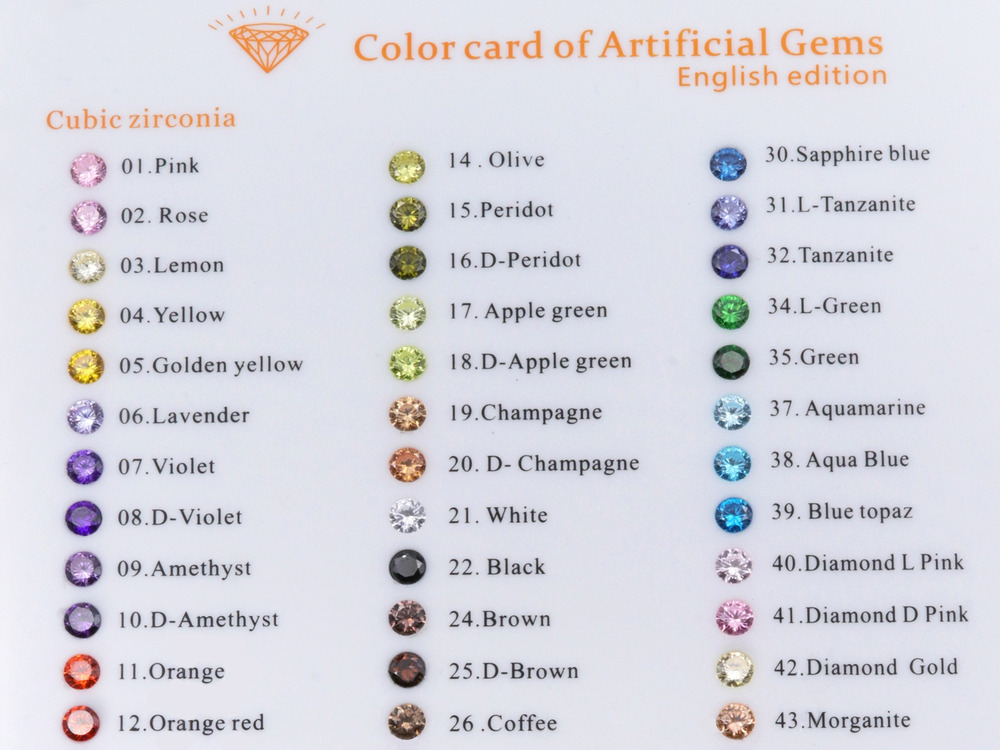
A practical note from our own sample room: colour names and materials are two different things. Our colour card covers 45 cubic zirconia shades plus synthetic spinel, synthetic corundum and nano-crystal families, and it carries the same warning we give every client - "colour words do not represent material". Always specify the material and the colour reference together, otherwise a "sapphire blue" request can arrive as CZ, spinel or corundum, and the piece will not match the reference image.
Metal choice changes a stone far more than most buyers expect. In our technical guide we pair Topaz with white gold, Amethyst with rose or yellow gold, Citrine and Peridot with yellow gold, Garnet with rose gold, and bi-colour Tourmaline with white gold. For the classic trio, 18K gold in yellow, white or rose is the standard pairing across our Ruby, Sapphire and Emerald work, while 14K is often selected for larger production runs where hardness and cost both matter. Purity follows the brief: 9K is the hardest and most budget-friendly, 14K is the international middle ground for most custom projects, and 18K delivers the purest colour and is the kindest option for sensitive skin.
A single stone can look completely different depending on how it is held. Prong setting suits high-brilliance solitaires because it returns the most light. Bezel setting surrounds the stone with metal and is the safest choice for emeralds, which is also why we recommend it for clients with an active lifestyle. Micro-pave creates a continuous sparkling surface for halos and band accents. Channel setting gives wedding and stackable rings a sleek, contemporary line. Grain setting is the quiet option for vintage patterns and delicate detail. Every AURAE setting is executed by hand under a microscope, followed by a 40x post-setting inspection and a zero-snag silk test, so no prong catches on clothing and no stone moves in the mount.
Lab-grown stones are chemically and optically identical to their mined equivalents and remove the supply risk from a production calendar, which matters when a launch date is fixed. Earth-mined stones carry rarity and resale narrative. Both are legitimate - the mistake is deciding late. Fix the stone family first, then the size, then the clarity grade, and let the budget follow. For most commissions, moving one grade down in clarity buys a visibly larger stone, and the difference in a finished piece is far smaller than the price gap.
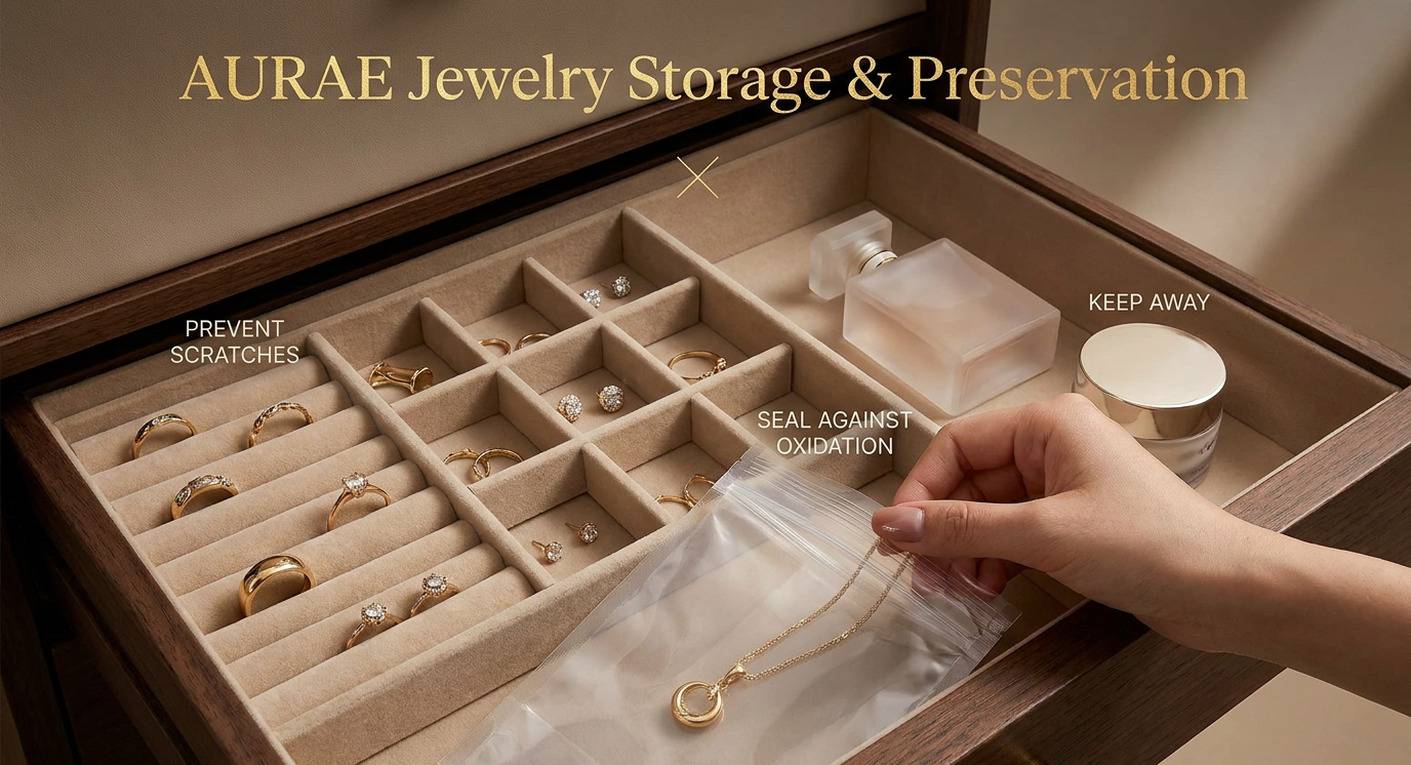
Emeralds should be treated gently: avoid ultrasonic cleaners, remove the piece before swimming, and store it separately from harder stones. Zircon and the softer light luxury gems benefit from the same discipline. The rule we give every client is simple: last thing on, first thing off. Take pieces off before sleeping, bathing, swimming, or training, and put cosmetics on before the jewellery rather than after, so no film of lotion or perfume sits against the stone. Stored in separate velvet-lined compartments and sealed against moisture, a stone keeps its colour and brilliance for a lifetime.
Once the stone family, colour reference and setting are agreed, our designers build a 1:1 digital model in CAD with 0.001mm precision calibration and share the render for approval before anything is cast. Stones are set by hand under a microscope after casting and finishing, and the finished piece passes a 20-point checklist covering sizing and weight, hallmarks, structural function, stone security and surface finish. Every item is inspected individually before it is packed, and our bespoke gold line starts from a single piece for 9K, 14K and 18K projects, so a client can test a design before committing to volume.
If you are unsure where to start, send us a reference image and a budget range. We will come back with a stone recommendation, a gold pairing, a setting that protects the stone you chose, and a 3D render you can approve before production begins.
2026/09/23
Discover why brass jewelry can cause green marks on skin and how AURAE prevents this issue effectively.
2026/09/21
Discover the benefits of jewelry electroplating in color, durability, and skin safety. Learn how it enhances your jewelry's longevity.
Bespoke know-how from our studio and factory floor: how we choose gemstones, build plating that lasts, and keep brass jewellery from turning skin green.
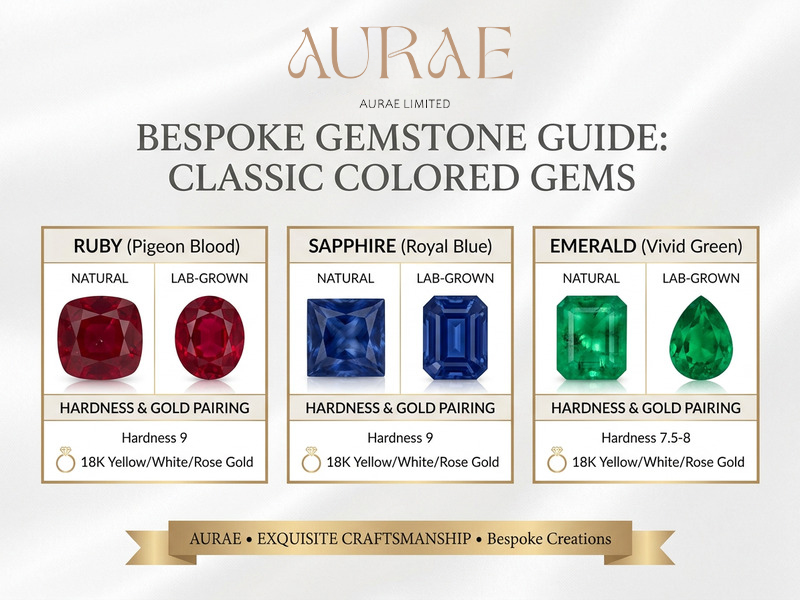
Hardness, colour and setting decide how a bespoke piece looks and wears. Our guide pairs lab diamond, moissanite, zircon, ruby, sapphire and emerald with a matching gold tone and a protective setting.
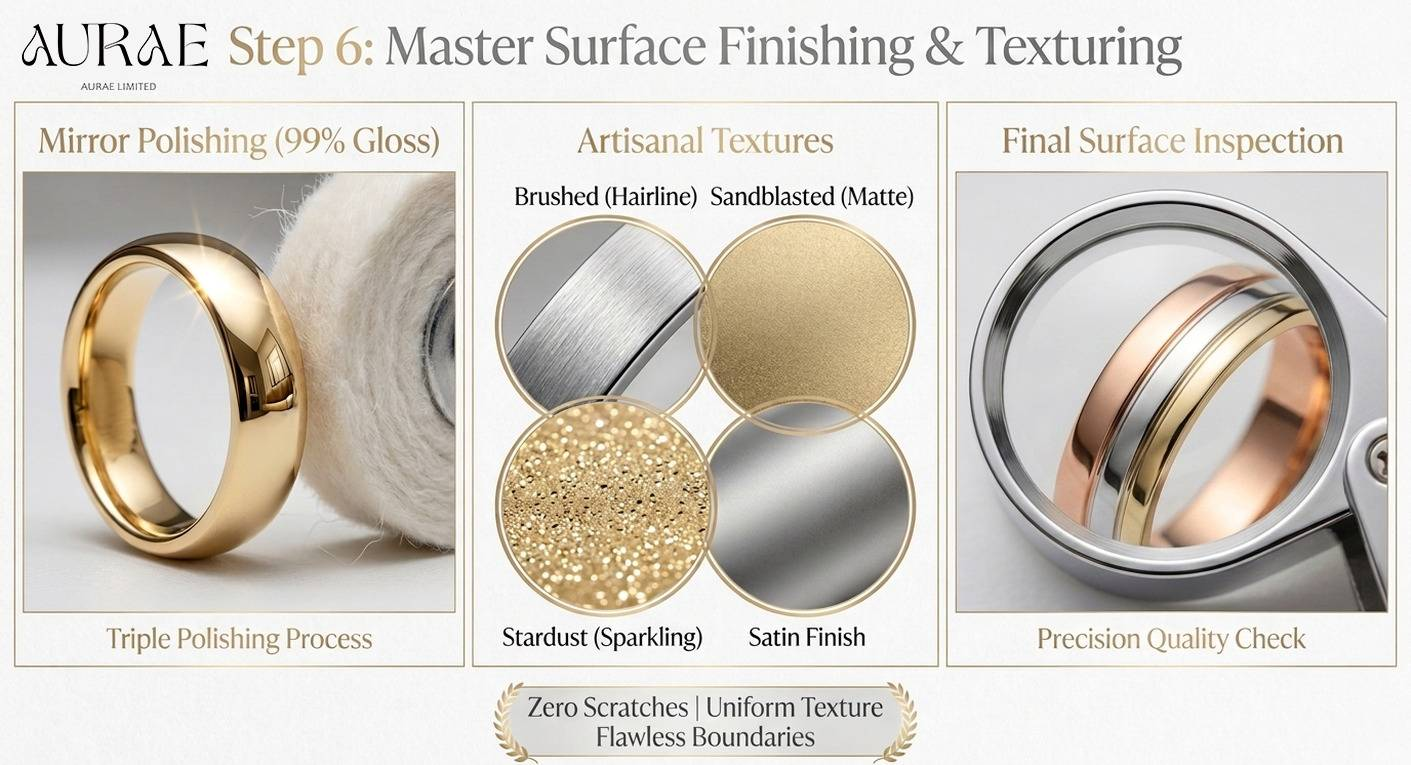
What happens between polishing and packing decides whether a finish lasts: water versus vacuum plating, the five-layer stack, white, gold and rose colour baths, and our salt-spray standard.
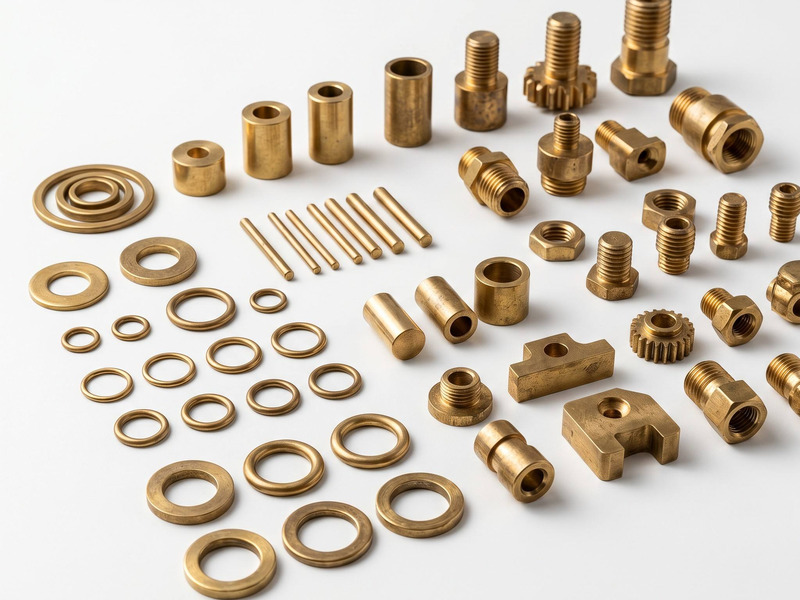
Green marks come from brass meeting sweat - and they can be engineered out. Our championship-ring brass formula keeps skin clean even when plating wears through.